
PLACES
Kolhapur: I Knew Why I Was Going
Some journeys begin with curiosity. This one began with knowing.
Scroll to explore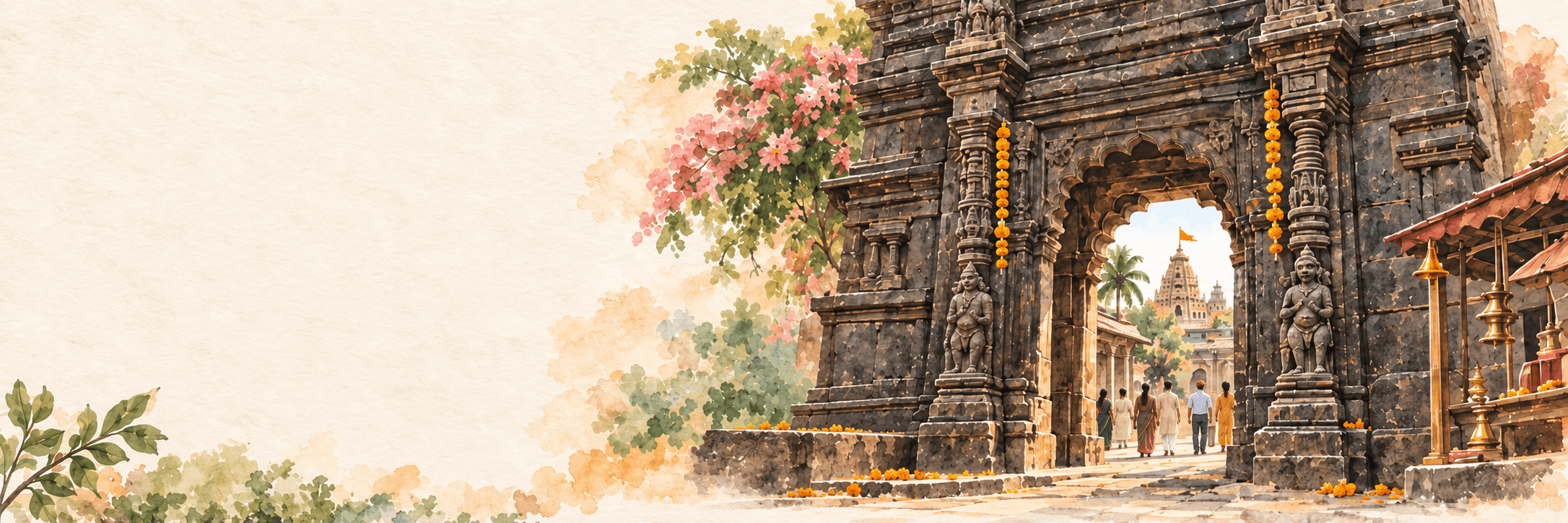
This summer, I travelled with my niece Diya to Kolhapur, a city in the western Indian state of Maharashtra.
It was the first time the two of us had travelled together—and my first girls-only trip in a long time. There was excitement in that. The pleasure of setting out together. The conversations, the laughter and the small freedom of being somewhere new.
But beneath all of that was another feeling.
I already knew why I was going.
At the heart of Kolhapur stands Mahalakshmi—Ambabai—and the city has long been revered as one of the sacred places of Shakti. Official accounts identify the temple as one of the Shakti Peethas and describe Kolhapur as an ancient center of devotion to Mahalakshmi.
We reached the temple on the evening of our arrival.
The crowds were lighter than I had expected, and we were fortunate to have darshan from close by.
And there she was.
After carrying the intention of this journey for so long, standing before her felt strangely personal. It was almost as though she were looking back at me and saying, with a quiet smile:
So—you finally made it.
This was not an accidental discovery. But knowing the story of a sacred place and actually standing inside it are two very different things.
A Temple That Has Outlived Kingdoms
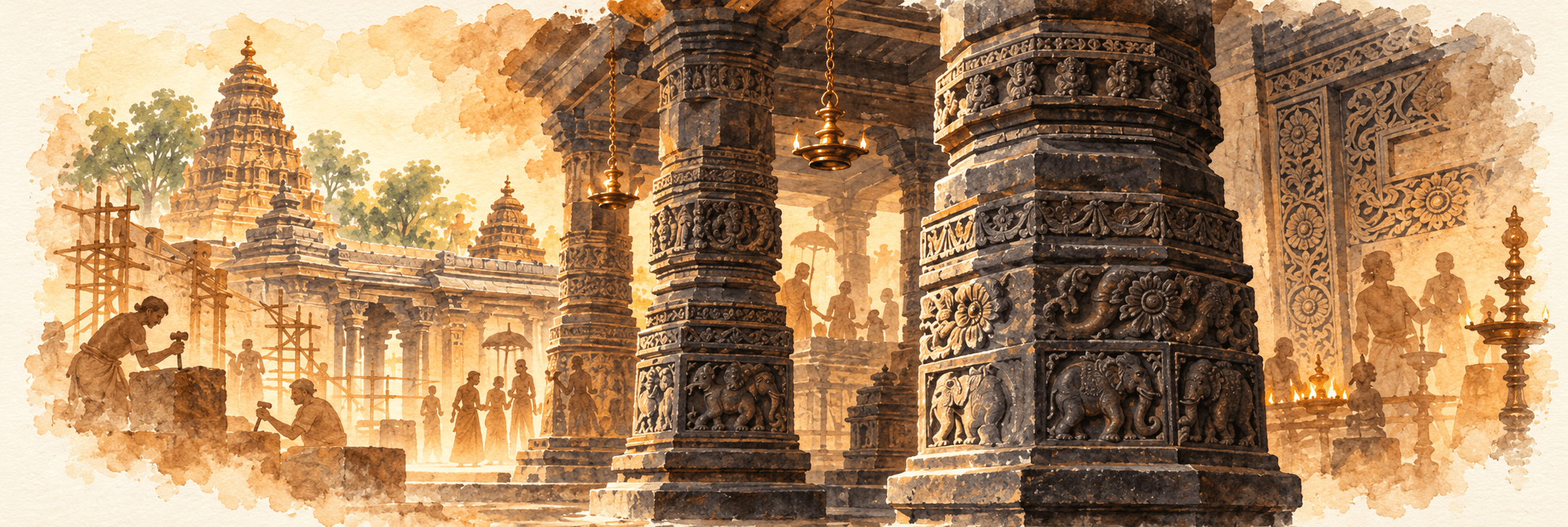
The Mahalakshmi Temple carries many centuries within its stone.
Its early history is traditionally associated with the Chalukya period, and later rulers and patrons expanded and restored the complex over time. The temple we encounter today is therefore not the creation of one moment, but a place shaped across generations.
Standing there, the word ancient suddenly felt insufficient.
Dynasties had risen.
Kingdoms had disappeared.
Streets had changed.
Generations had come and gone.
And Ambabai remained.
Perhaps that is why the temple feels less like a monument preserved from the past and more like something continuously alive.
But Why Is Kolhapur a Shakti Peeth?
To understand that we have to go back to the story of Sati and Shiva.
Sati, the daughter of King Daksha, was the beloved wife of Shiva. When Daksha performed a great yajna, he deliberately excluded Shiva and insulted him. Sati went to the gathering despite the tension and, unable to bear the dishonour directed towards her husband, gave up her life in the sacrificial fire.
Shiva was overcome with grief.
He lifted Sati’s body and carried her across the universe, consumed by sorrow. In the traditional telling, the force of that grief threatened cosmic balance.
Vishnu intervened.
Using his Sudarshana Chakra, Vishnu divided Sati’s body, bringing Shiva’s grief-stricken journey to an end and allowing cosmic order to be restored. The places where parts of her body—or, in some traditions, her ornaments—were believed to have fallen came to be revered as Shakti Peethas: seats of Shakti.
Together, these sacred places form something like a mythic geography of the Goddess—different locations bound together by one story of loss, power, memory and presence.
And Kolhapur belongs to that sacred geography.

Different Shakti Peetha lists preserve different associations, but in the Karavira tradition identified with Kolhapur, the site is linked with Sati’s three eyes—her trinetra.
I find that especially beautiful.
Because an eye is not simply an object.
It is about seeing.
And the third eye suggests another kind of seeing:
inner vision, awareness, insight.
Suddenly, the pilgrimage acquires another layer.
I had come to see the Goddess.
But perhaps the older question hidden within the place was:
How do we learn to see differently?

Look Closely at Ambabai
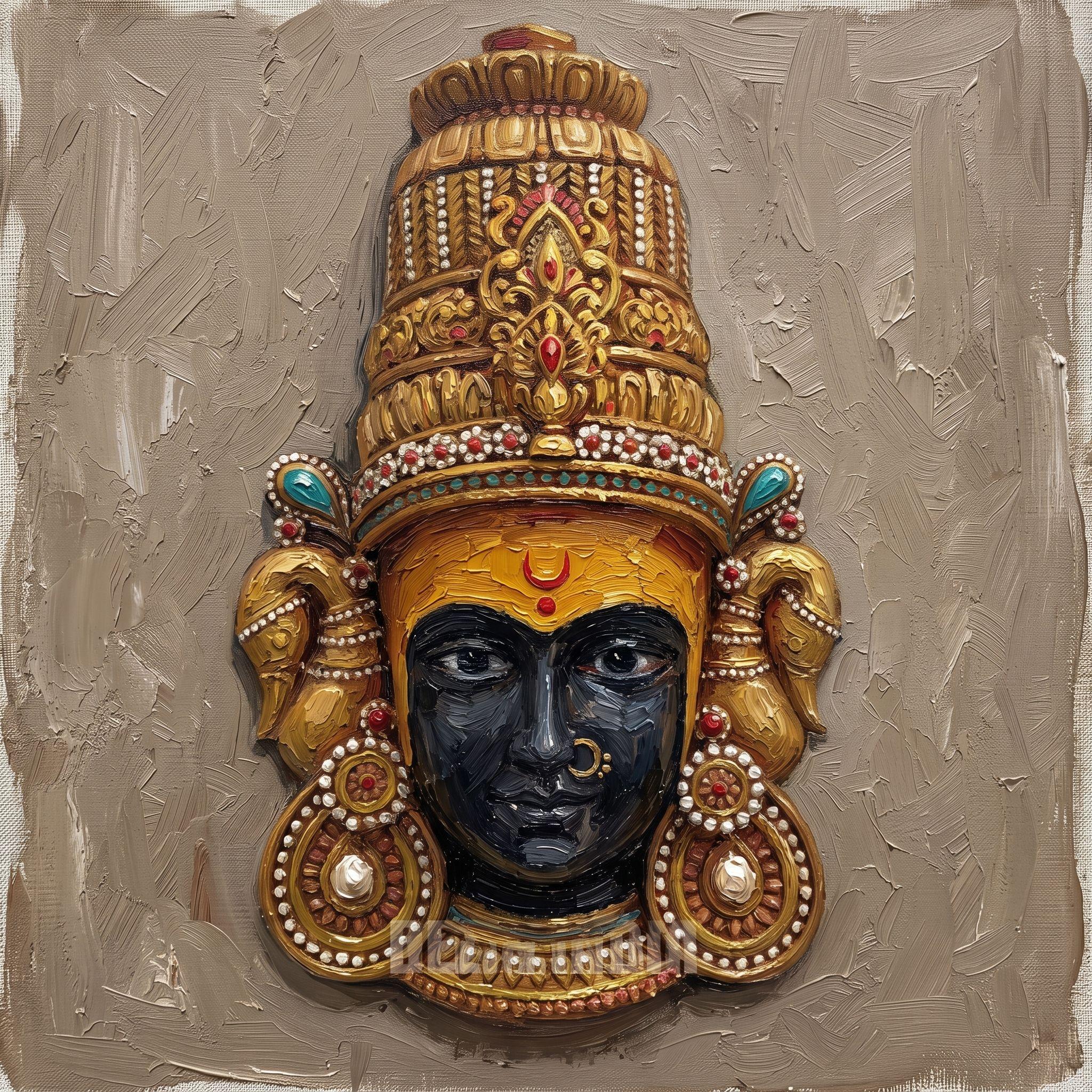
The form of Mahalakshmi here is also strikingly different from the lotus-bearing Lakshmi many of us recognize immediately.
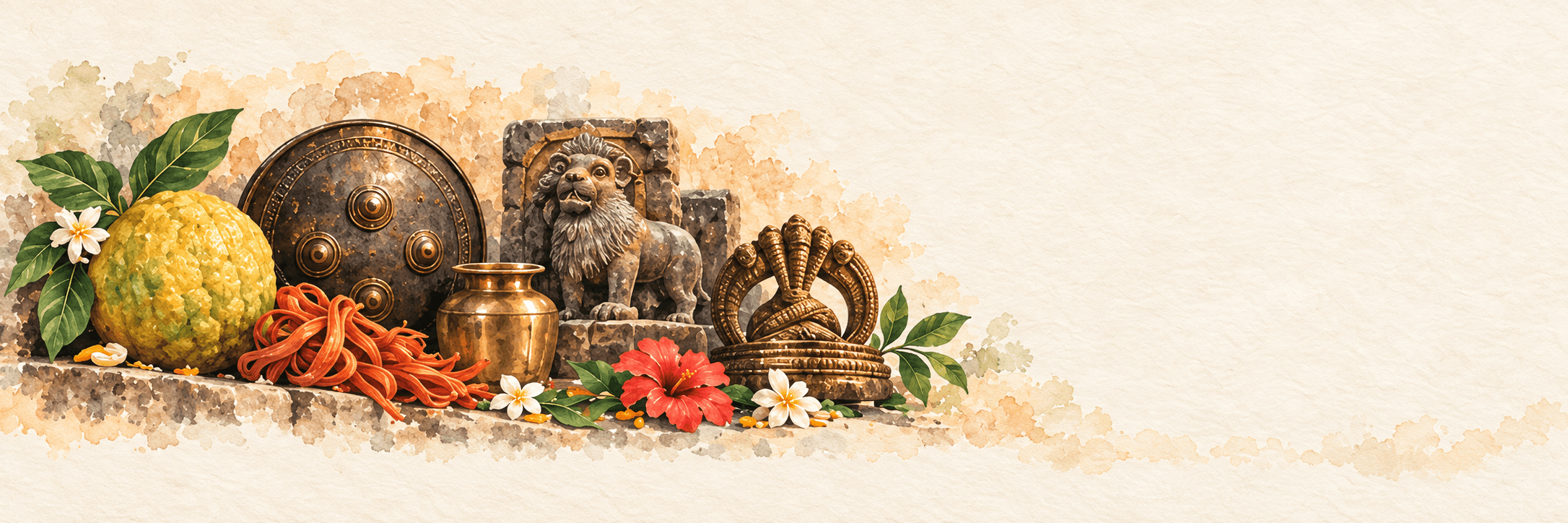
The black-stone deity holds a matulinga fruit, a mace, a shield and a drinking vessel. A stone lion stands behind her, and her crown carries a serpent form.
This is a very different visual vocabulary.
The fruit suggests abundance.
The mace suggests power.
The shield suggests protection.
The vessel suggests sustenance and fullness.
Together, they ask us to look beyond the most familiar image of Lakshmi.
Here, Mahalakshmi is encountered as Shakti.
Power.
Protection.
Presence.
Abundance.
Authority.
Sometimes we know a deity so well through one familiar image that we stop looking closely.
Kolhapur asks us to look again.
When Stone Meets Sun
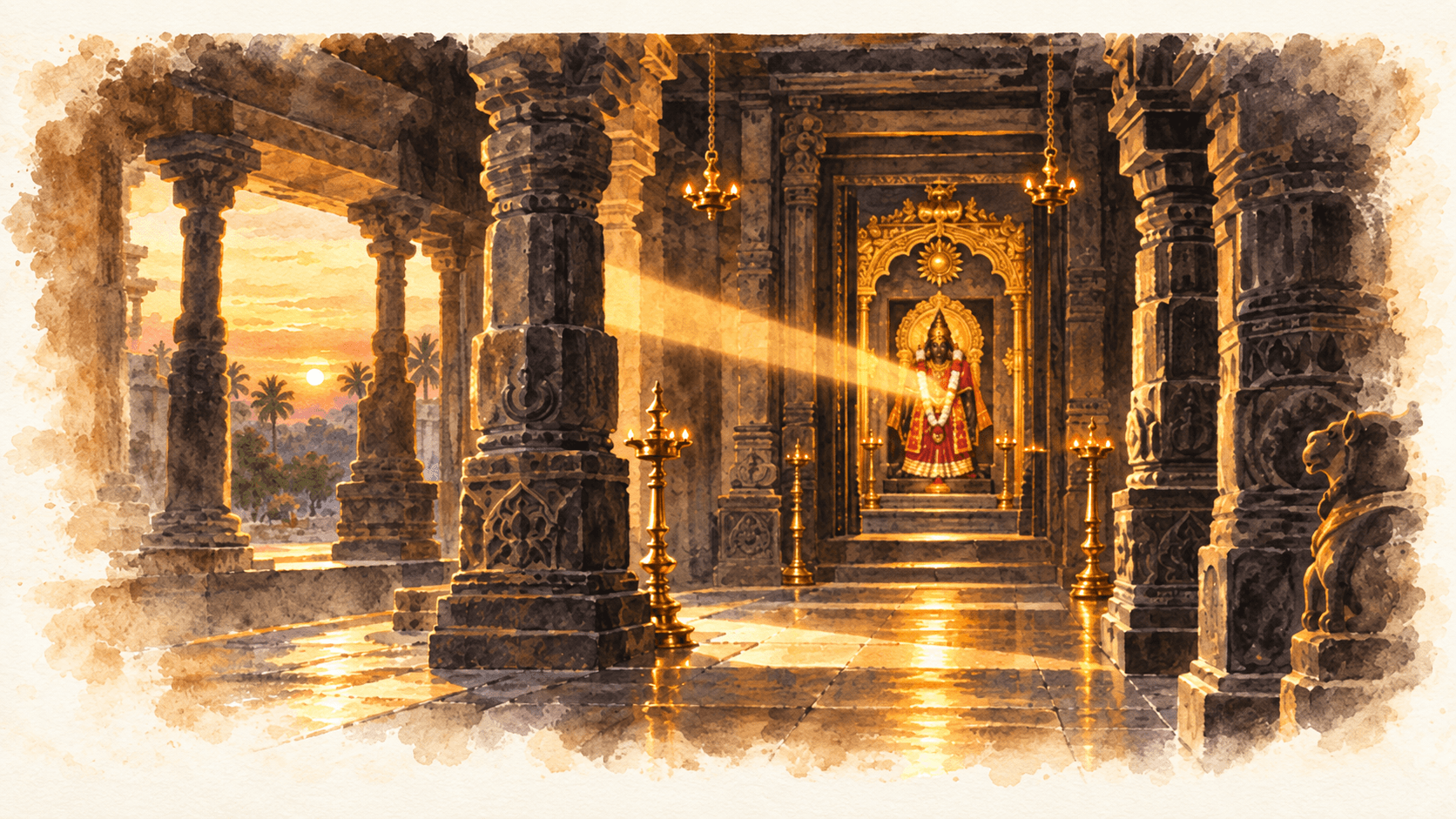
There is another extraordinary detail built into the temple itself.
During Kirnotsav—the Festival of Rays—the setting sun aligns with the temple architecture and illuminates the deity within the sanctum. Official temple information records this phenomenon twice each year.
Think about what that means.
Stone.
Direction.
Sun.
Season.
Deity.
All brought into relationship.
At that moment, architecture is no longer simply surrounding the sacred.
It participates in it.
The temple becomes a way of bringing light, time, season and devotion into one experience.
And Then There Are the People
The next morning, Diya and I returned to the temple for another darshan and for the abhishekam.
We arrived after the ritual had begun.
The priests were chanting the Sri Suktam, and the head priest gestured for us to sit down.
There are sacred sounds that do more than fill a room. They seem to gather the mind, steady the body and alter the atmosphere around us. Sitting there as the chanting continued, I felt energized.
Afterwards, we made our way back to Ambabai.
Once again, we were fortunate enough to stand before her.
Yet the deepest thing I carried away from Kolhapur was not a historical date or an architectural fact.
It was continuity.
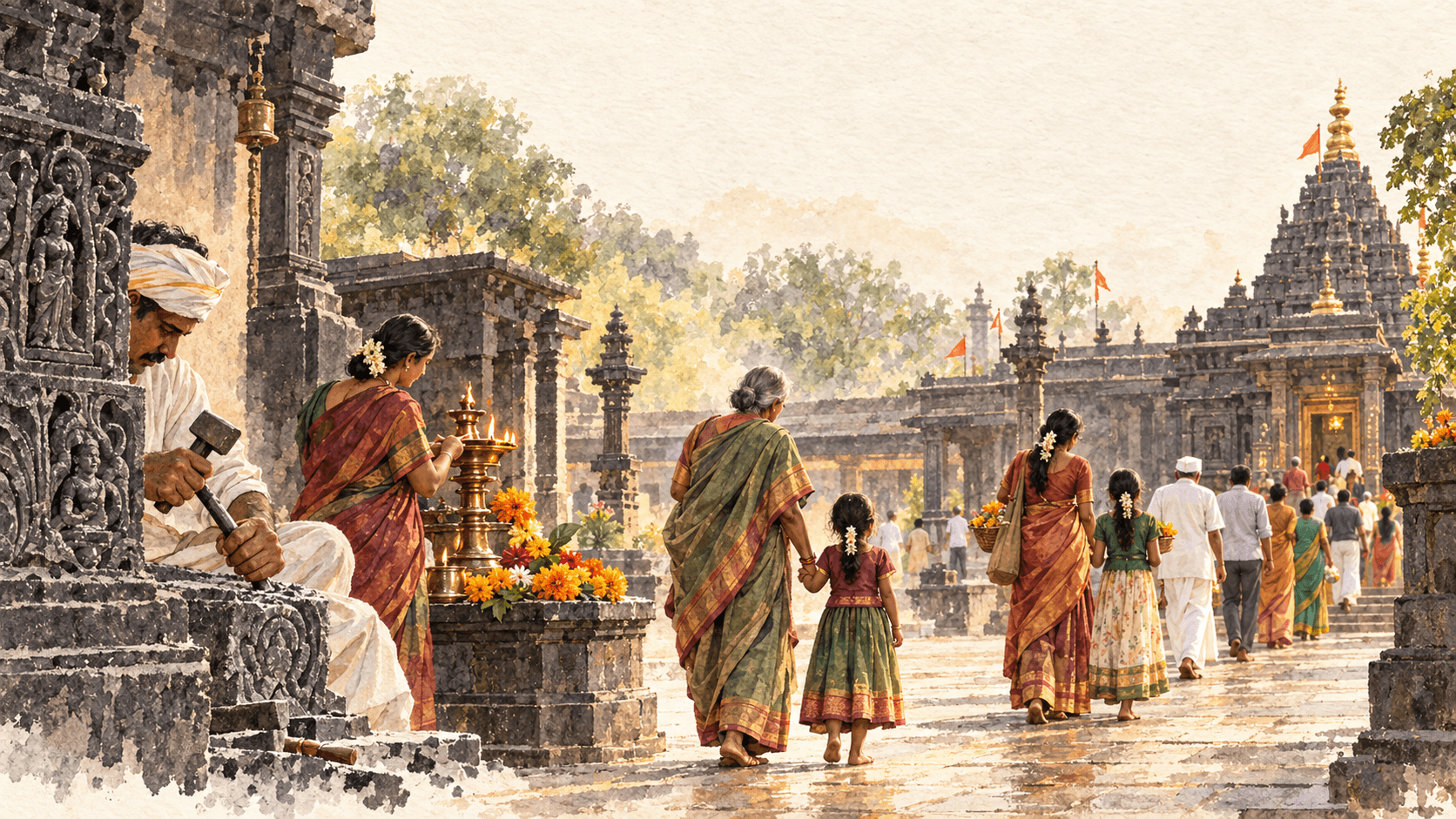
A ruler builds.
Another enlarges.
An artisan carves.
A priest performs the ritual.
Someone lights a lamp.
Someone brings flowers.
A grandmother brings a child.
A niece helps make her aunt’s long-held journey possible.
A family comes because another generation once told them:
Go there. She is there.
And they go.
Again, and again.
That is how a sacred place survives.
Not because stone refuses to disappear.
But because people refuse to forget.
When Ambabai Came Home With Me
After darshan, I did what I almost always do near a temple: I went looking among the vendors.
I love discovering dolls, murtis and small objects that may one day find their way into a Golu. My mother, it seems, still finds unexpected ways to lead interesting things towards me.
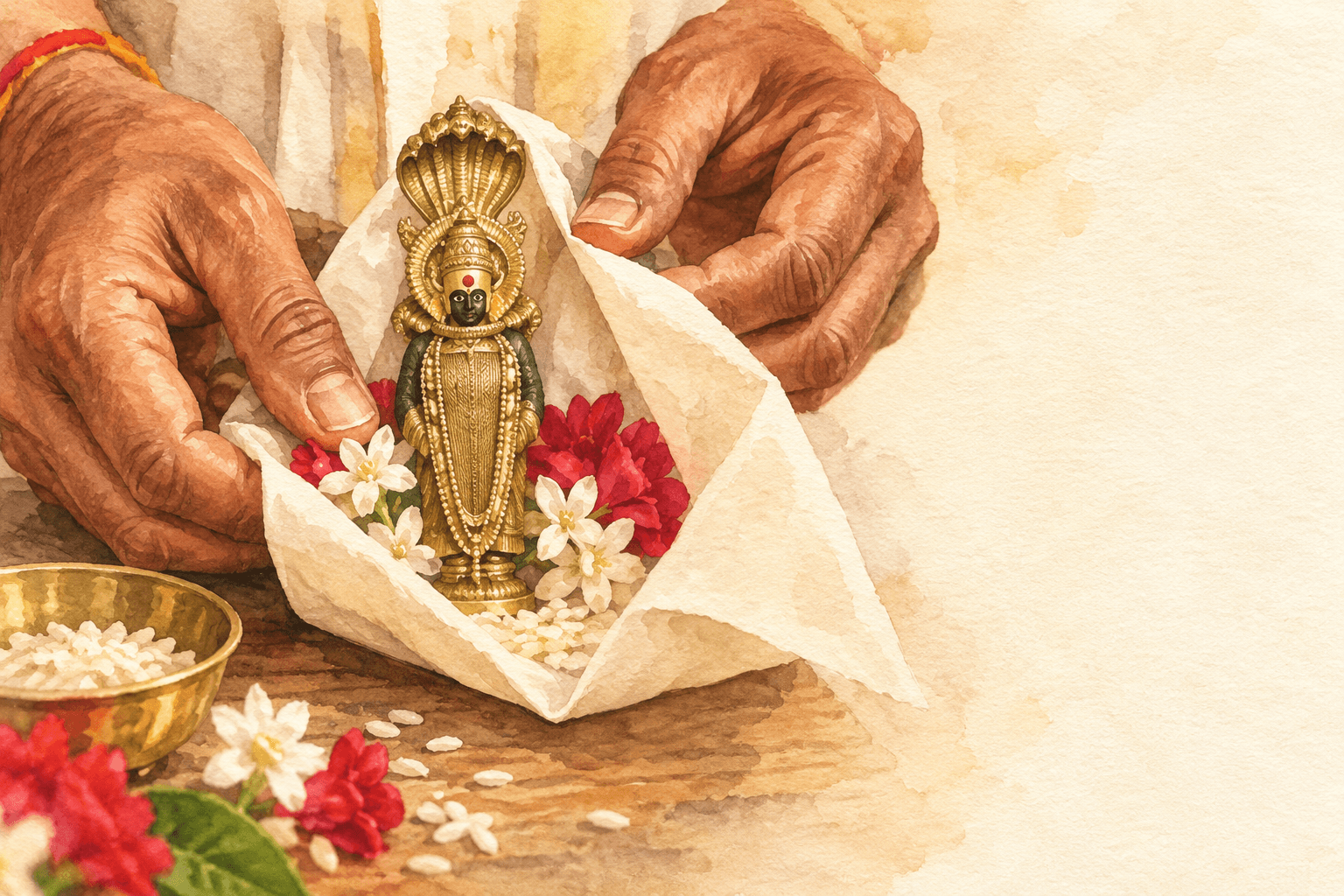
At one stall, behind several rows of dolls and murtis, I noticed a small form of Ambabai.
I picked it up casually and asked the vendor to tell me about it. Only then did I learn that it was made of panchaloha.
He told me it was a replica of the original murti of Ambabai. Before giving it to me, he wanted to place it at Maa’s feet.
He packed it carefully and reverently, with flowers and rice, and placed the precious form into my hands.
I had travelled to Kolhapur to see Ambabai.
Now, in a small and unexpected way, Ambabai was coming home with me.
There was delicious Kolhapuri food before the journey ended, and a Kolhapuri Saaj to carry another memory of the city home.
But the small panchaloha Ambabai meant something different.
She was not simply a souvenir from a place I had visited.
She held the memory of intention, darshan, sacred sound, Diya’s care and a journey that had finally become real.
RETURN
I went to Kolhapur already knowing that Ambabai was the reason for my journey.
What I understood more deeply after standing there was why people had kept making that journey for centuries.
A sacred place is not only something we inherit.
It is something we keep alive by returning to it.
Thanks to Diya, visiting Ambabai became a reality.
This summer, I became one more person in that long line.

What makes a place sacred—the story attached to it, the presence people experience there, or the generations who keep returning?