
Exhibit 001 · True Memory
Idli Horror/ Idli Redemption
The case of a breakfast that refused to leave.
Open the breakfast case · Click or tap
Evidence preserved · still edible
Exhibit 001 · True Memory
The case of a breakfast that refused to leave.
Open the breakfast case · Click or tapA dark room. A strange noise outside the window. The possibility of a mathematics test on Monday.
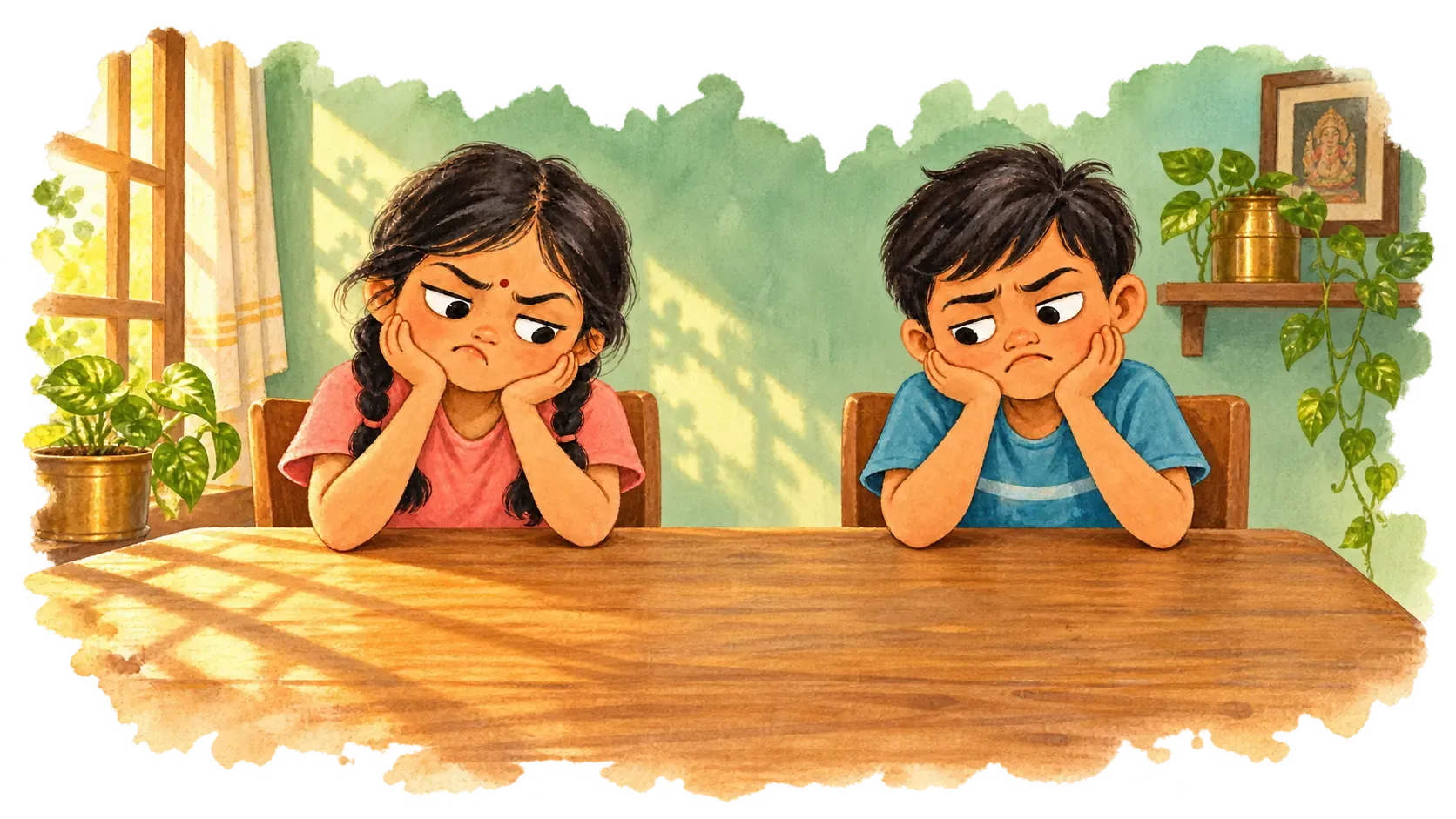
One ordinary breakfast. Two deeply dissatisfied children.
One father whose loyalty never wavered.
And then, in our house, there was idli.
It appeared with the confidence of a family member who knew nobody could ask it to leave.
Yes, idli.
That innocent, round, white South Indian breakfast that other people describe with words such as soft, fluffy, comforting and wholesome.
My brother and I had another word for it:
Again?
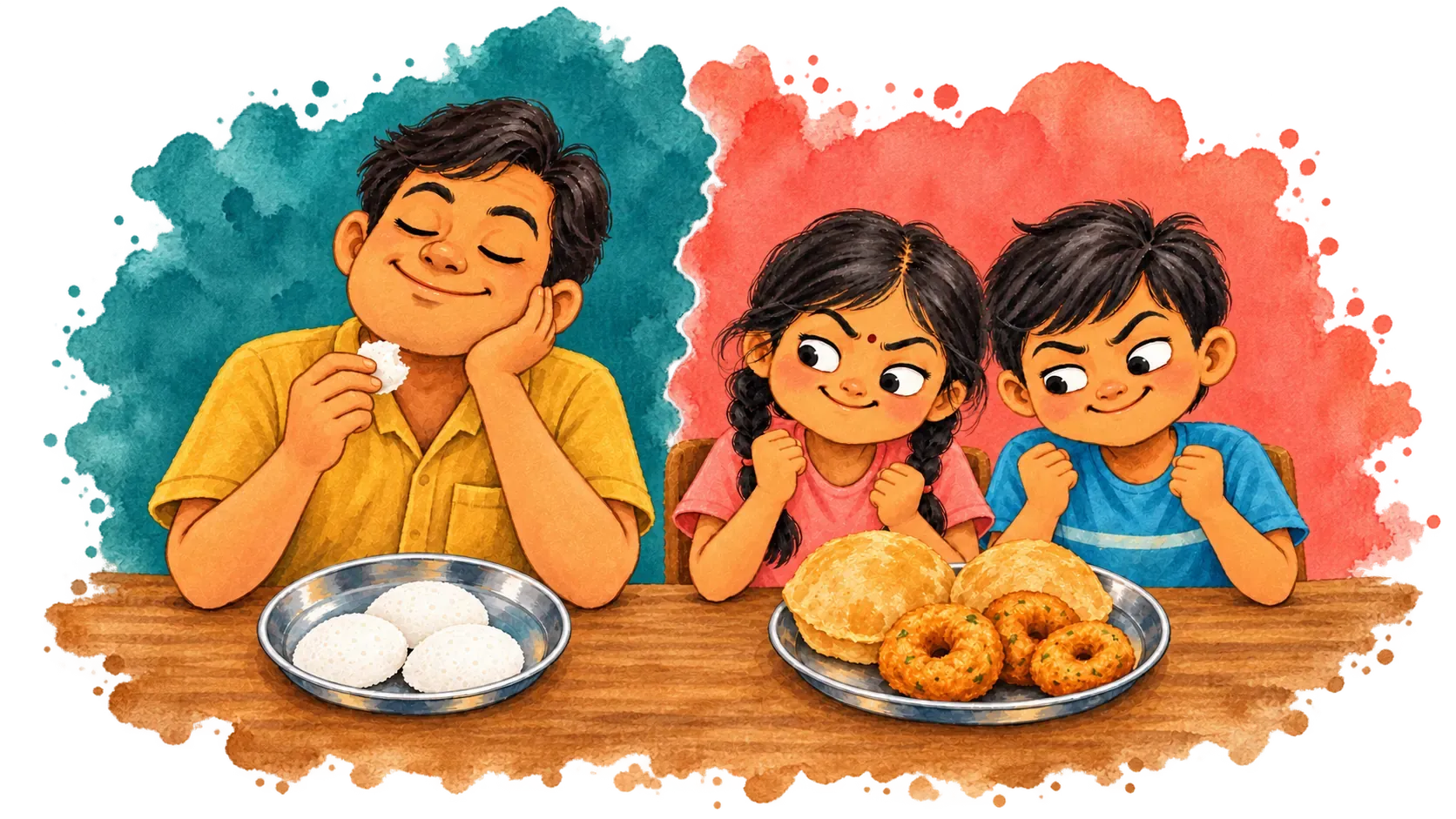
Idli appeared at our breakfast table with the confidence of a family member who knew nobody could ask it to leave. It sat quietly on the plate—pale, round and completely certain of its position in the household.
Our father loved it. To him, idli was not merely breakfast.
It was reliability in edible form.
My brother and I would look at the same plate as though breakfast had been cancelled and replaced
by homework.
What we wanted was puri—golden, puffed and magnificent. Or vada—crisp, golden and proud of its
little hole.
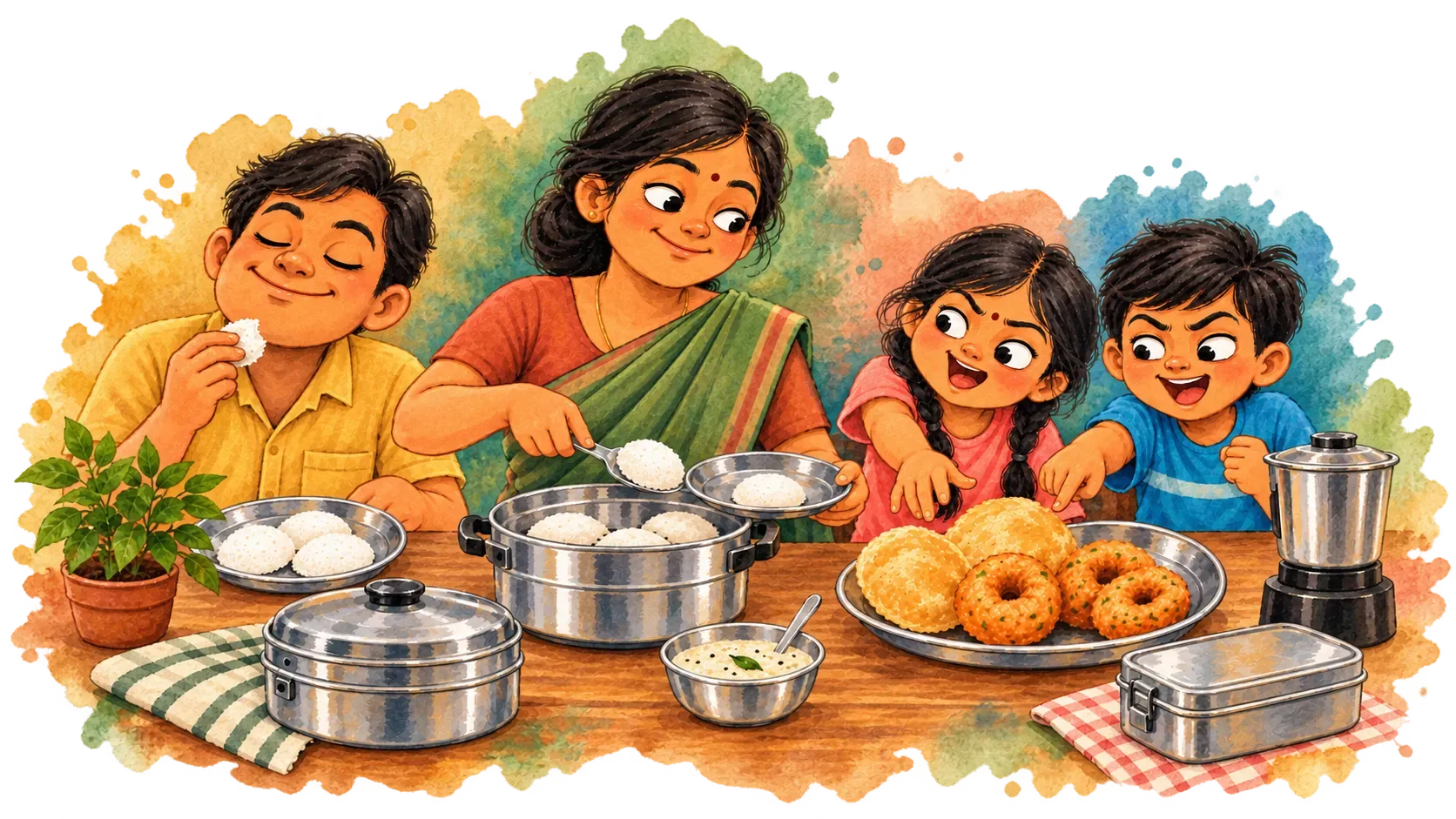
Our poor mother stood in the kitchen, surrounded by three breakfast constituencies.
Father represented the Idli Party. My brother and I formed the Puri–Vada Opposition Alliance. Amma was the entire government.
“Amma, I don’t want idli.”
“Amma, can you make puri?”
“Amma, I want vada.”
“Is there more chutney?”
“Where is the sambar?”
“Gangi, can I have another idli?” Father would ask happily, providing absolutely no assistance to the ongoing crisis.
At that age, we believed mothers possessed unlimited time, unlimited energy and possibly eight invisible hands.
Why couldn’t she simply prepare idli for Father, puri for one child and vada for the other? How difficult could it be?
Very difficult, as it turns out.
 PlanSoakGrindFermentSteamServe everyone
But children do not understand soaking, grinding, fermenting, steaming, heating oil, preparing chutney, packing lunches, getting everyone ready and then cleaning a kitchen that looks as though three restaurants have fought a battle inside it.
Children understand only one great injustice:
The breakfast they wanted is not on the plate.
Years passed, but those breakfast battles stayed perfectly preserved in my memory.
Eventually, I discovered the terrible truth: meals do not appear by magic.
Someone plans them. Someone shops for them. Someone prepares them. Someone serves everyone else. And someone washes all the vessels after the family food critics have completed their review.
Very often, that someone was Amma—quietly conducting the morning orchestra while the rest of us submitted increasingly unreasonable menu requests.
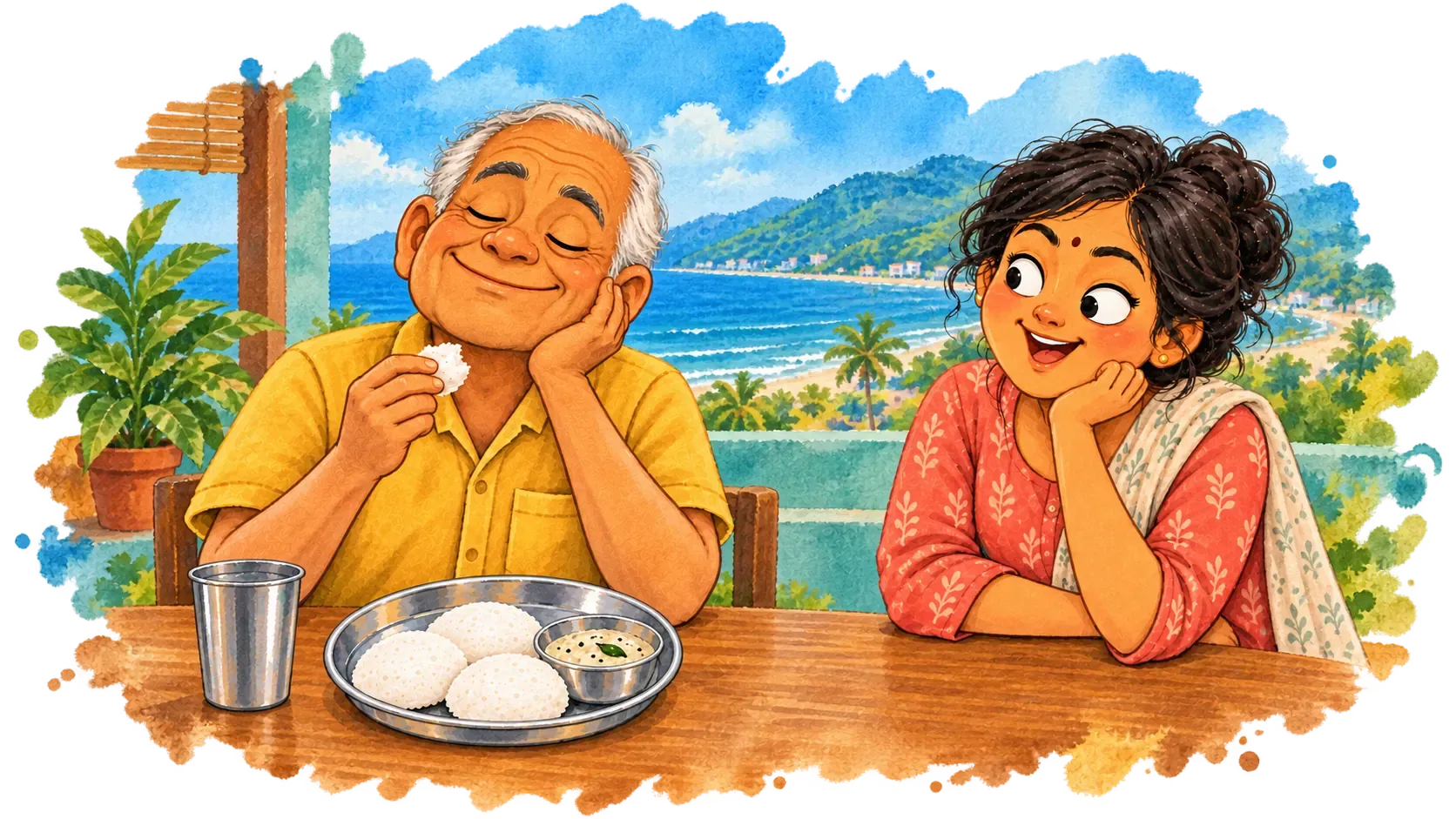
One of my close friends knows this very well. She considers my dislike of idli one of my more unreasonable character defects. In her view, refusing to love idli is almost a cultural offence. She has spent years presenting evidence in its defence.
It is soft. It is healthy. It is easy to digest.
All excellent arguments. None of them has made me want to eat it.
Recently, this friend travelled to Vizag and met my father. Later, she reported—with the satisfaction of someone whose case had finally been proven—that my father had been eating idli.
Of course he had.
After all these years, history had not moved even one inch. There was Father, still loyal to his favourite breakfast. There was idli, still occupying its permanent position on the plate. And there was my friend, delighted to discover that the strongest evidence in idli’s defence had been sitting in Vizag all along.
Her report instantly returned me to our childhood breakfast table. Father welcoming the idlis like old friends. My brother beside me, equally horrified and fully committed to the Puri–Vada Opposition Alliance. Amma in the kitchen, probably wondering why she had been given a family in which breakfast required coalition negotiations.
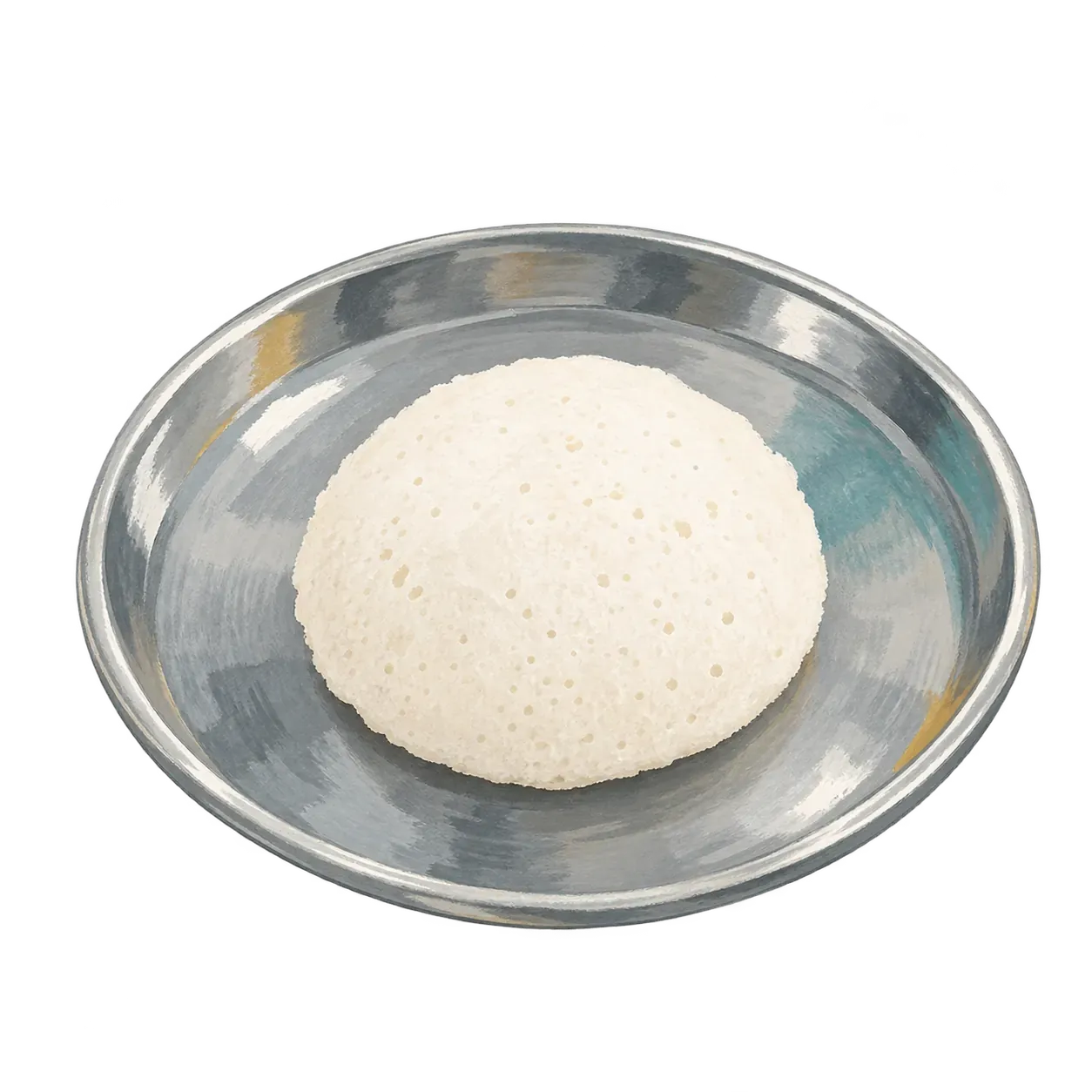
Back then, we noticed the idli. We did not notice the woman who had prepared the batter, steamed the idlis, made the chutney, served everyone and listened patiently while two children campaigned for an entirely different breakfast.
Today, I understand.
The idli was never the villain.
It was simply the small, round witness to our family mornings.
It witnessed Father’s contentment, our dramatic protests and Amma’s impossible workload. It stayed quietly inside the family story long after the plates were cleared.
I still would not call idli my favourite breakfast. Let us not allow nostalgia to interfere with
historical accuracy.
But now, when I see one, I see more than the pale circle of childhood disappointment.
I see Father, loyal as ever. I see my brother beside me, united with me against breakfast injustice. I see my friend returning from Vizag with fresh evidence.
And most of all, I see Amma—trying to satisfy three different wishes with only two hands.
The Museum has therefore completed its investigation.
The idli is found not guilty.
But if puri is available, I am still ordering puri.