
Look Before You Interpret
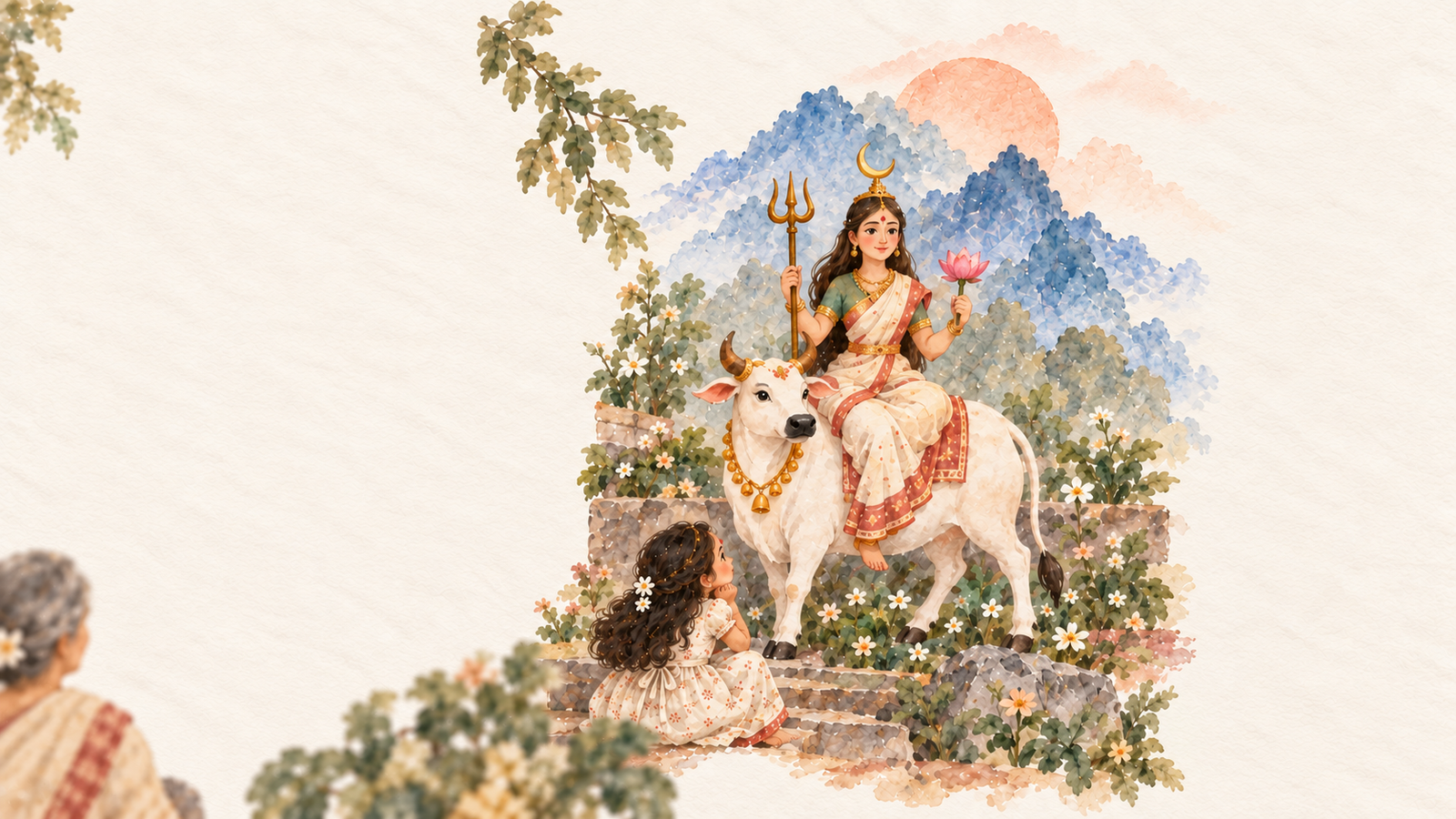
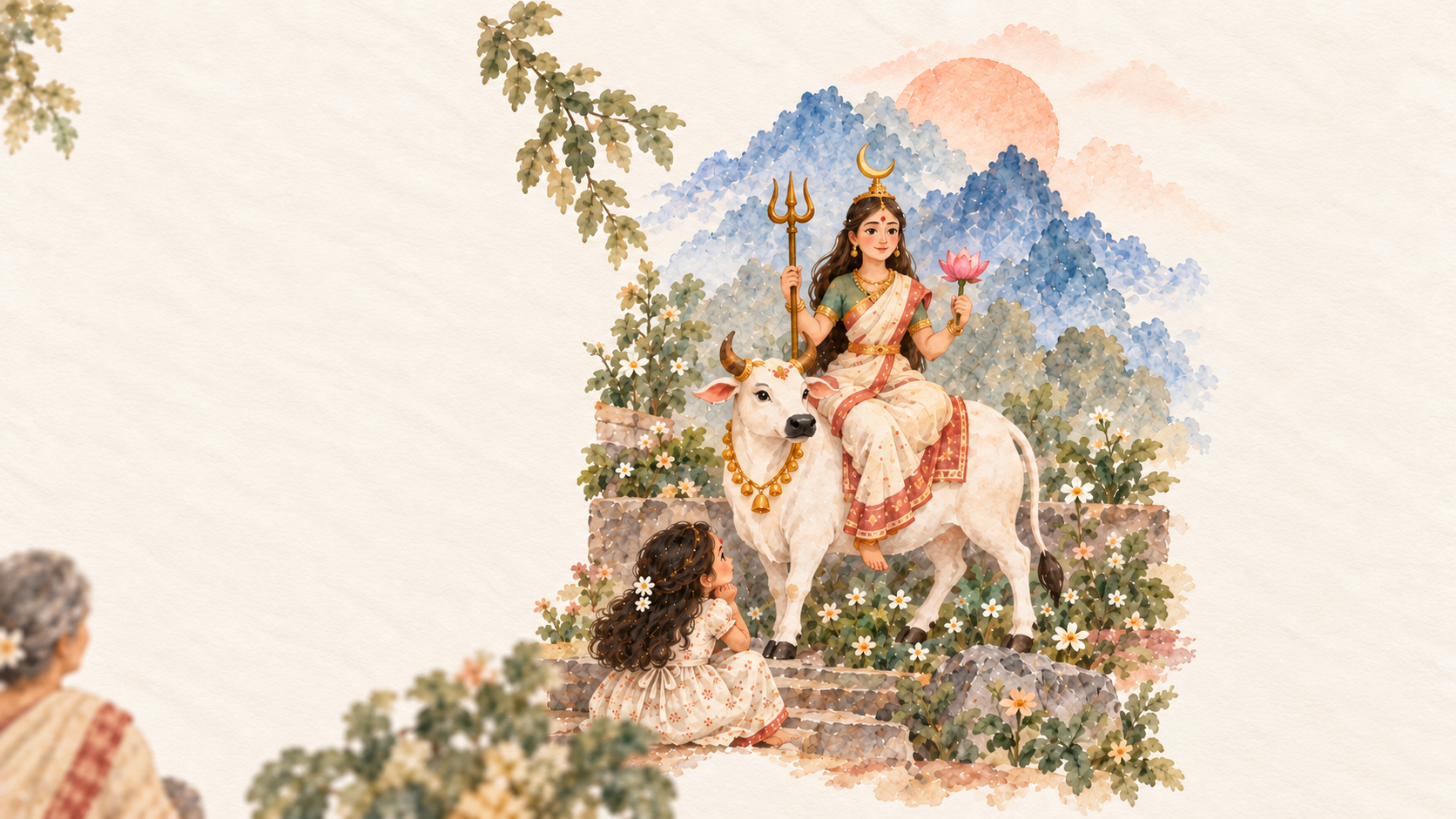
Veda moves closer to the Shailaputri form.
She is riding a bull.
Yes.
And she is carrying a trishula. What does it mean?
Before we decide what anything means, let us first learn to see what is actually before us.
So we should not simply say, ‘The bull means this, the lotus means that’?
Not before we know what the source or tradition actually tells us. First, we look carefully. Interpretation must come after attention.
In the form followed here, Shailaputri is shown with two arms, mounted upon a bull.
A crescent moon rests at her crown.
She carries a trishula in her right hand. In the familiar depiction used for this experience, her left hand holds a lotus.
These details help us recognize Shailaputri. But recognizing a sacred form is not the same as reducing every object to one quick meaning.
Look Again

The Crescent —
She is described as crescent-crested.
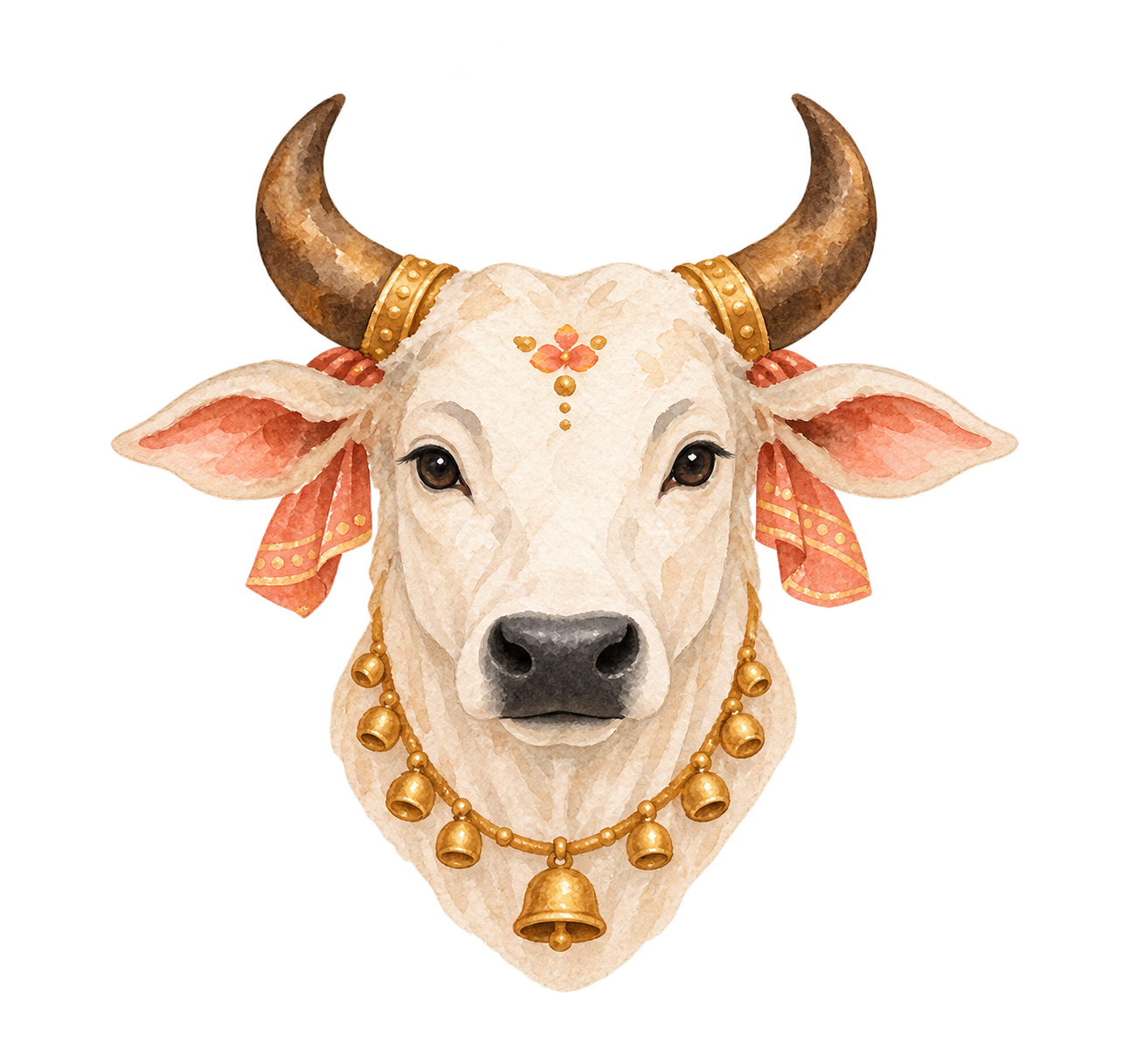
The Bull —
She is shown mounted upon a bull.
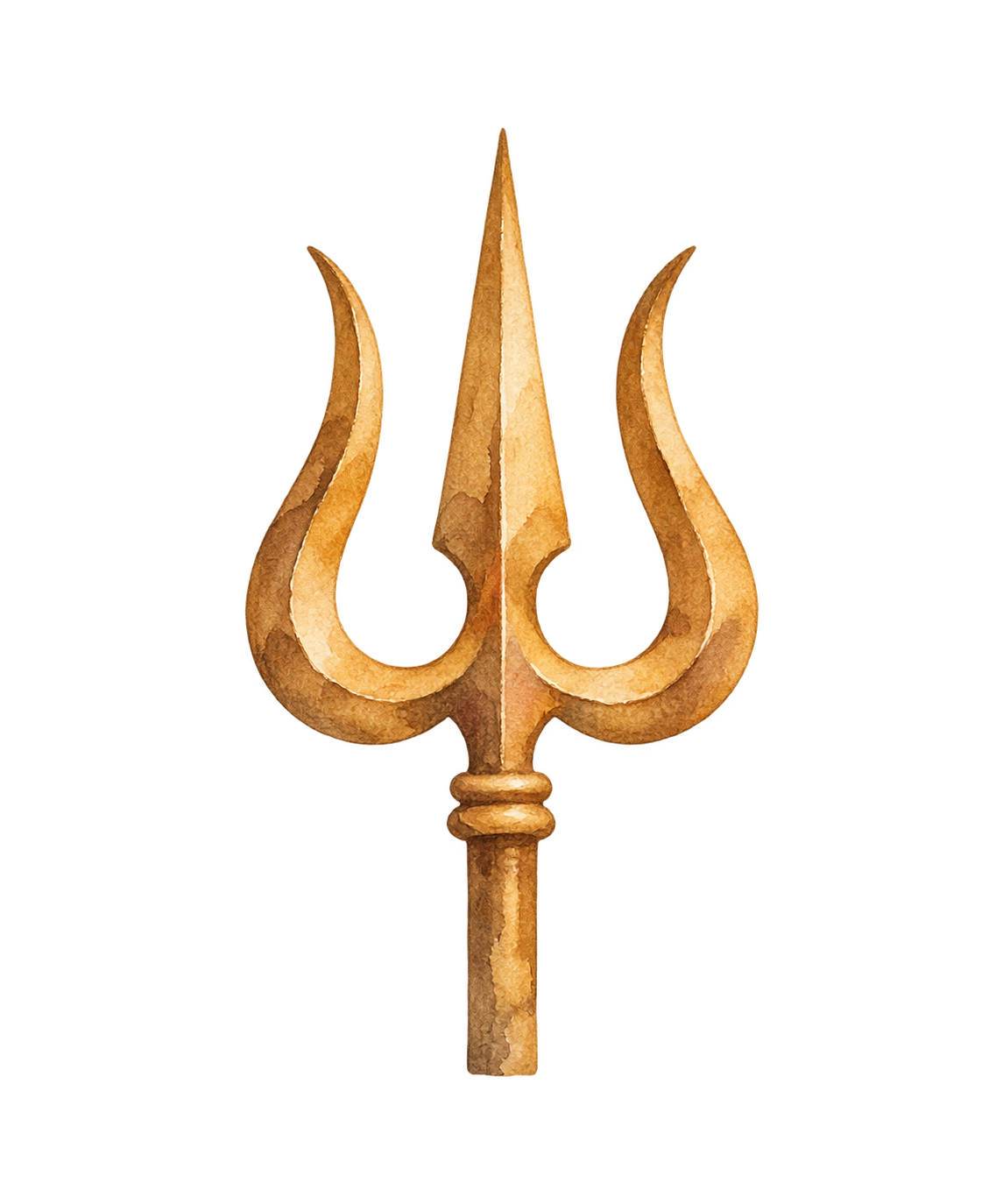
The Trishula —
She carries the trident.
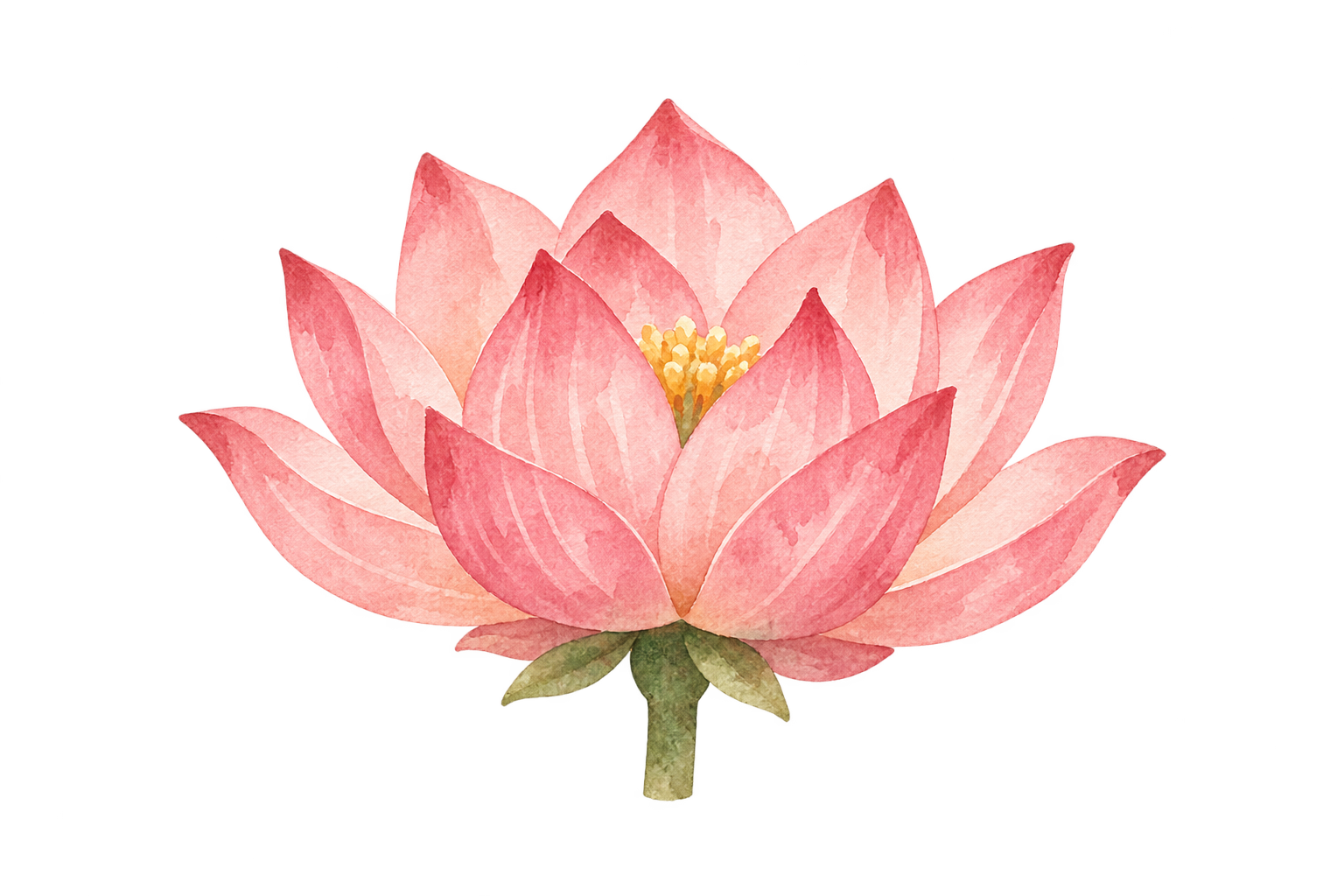
The Lotus —
It appears in the other hand in the familiar two-armed depiction followed here.
The crescent - She is described as crescent-crested.
The bull - She is shown mounted upon a bull.
The trishula - She carries the trident.
The lotus - It appears in the other hand in the familiar two-armed depiction followed here.
A sacred form is not a puzzle to solve as quickly as possible. Looking carefully allows its distinctions to remain visible.
Interpretation must come after attention.