
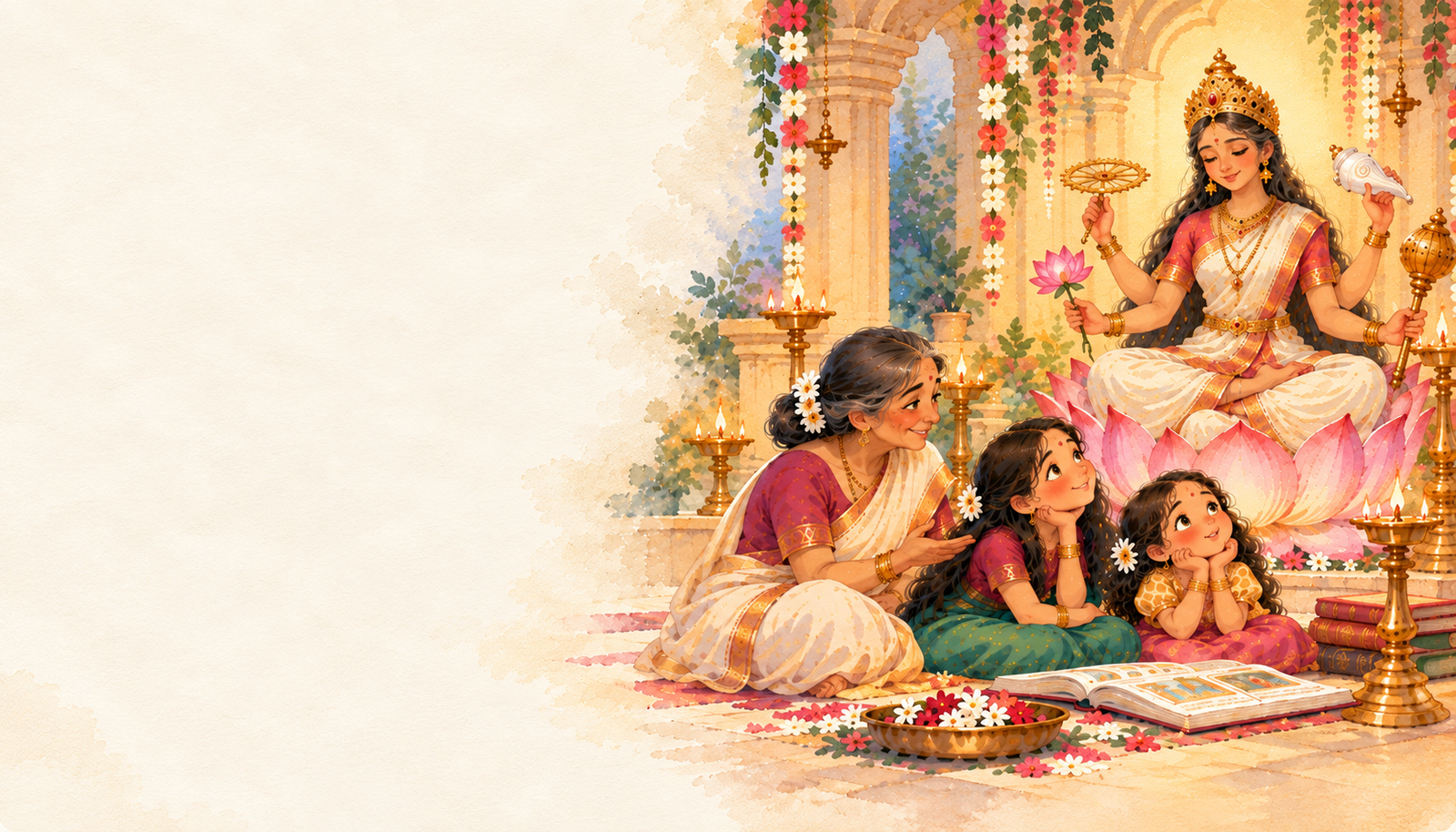
Night Nine . Understand Her
SIDDHIDATRI
What Is Siddhi?
Siddhi is not easy to fit into one English word. It can point toward something brought to accomplishment or realization through practice. In yogic traditions, siddhis can also refer to extraordinary capacities.
So siddhi is not simply: success. winning, getting what you want. And Siddhidatri is not remembered merely as the one who rewards effort. Her name places something else at the center: bestowal. Something is given.
Veda:"So siddhi means winning?"
Ammomma:"Not quite."
Akka:"Then do you have to earn it?"
Ammomma:"Practice matters. Effort matters. But not
everything meaningful is something
we make happen by ourselves."
Golu Girl looked again at Siddhidatri.
Akka:"In the story, Shiva receives siddhi from her too?"
Ammomma:"Yes. That is how one well-known tradition tells it."
Veda looked up.
Veda:"Shiva gets something too?"
Ammomma smiled.
Ammomma:"He does."
In a widely told Siddhidatri tradition, even Shiva is described as receiving siddhis through her. But its shape is important: even a figure associated with great power is shown receiving. The final night does not have to center the person who has conquered everything alone. It can make room for both: effort and receiving, practice and grace, doing and being given.
Strength does not mean doing everything alone.

Receiving is not the opposite of strength. There are gifts, relationships, teachings, and capacities in life that we recognize, respond to, and carry — not because we made them happen alone, but because they were also given.

What is something meaningful in your life that you did not create entirely by yourself?